


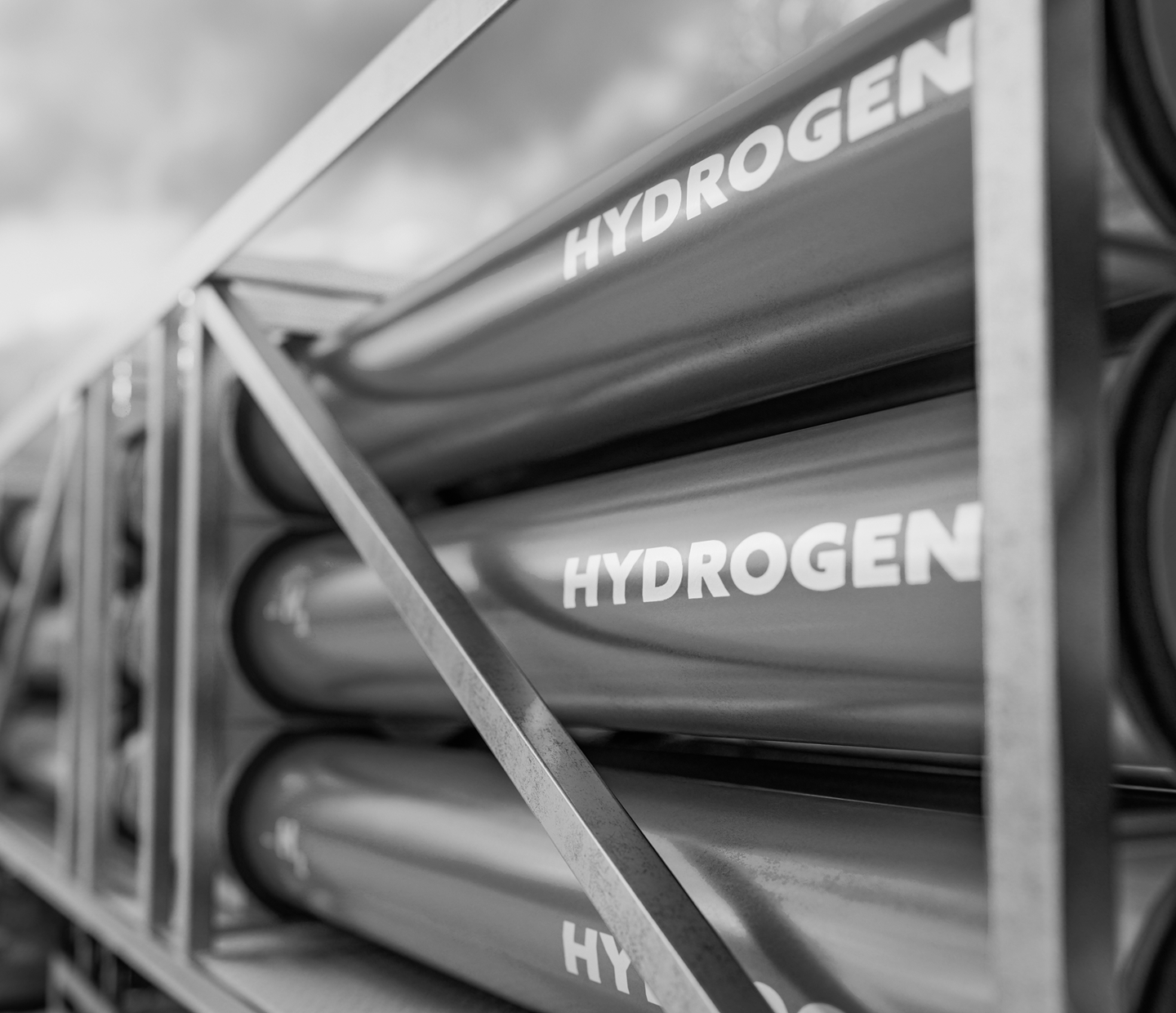
Liquid vs. Gaseous Hydrogen:
Key Considerations for Heavy-Duty Fueling
As the transition to clean energy accelerates, hydrogen emerges as a leading solution for decarbonizing heavy-duty transportation. However, infrastructure decisions—including whether to deploy liquid hydrogen (LH₂) or gaseous hydrogen (GH₂) fueling systems—play a crucial role in hydrogen's scalability, efficiency, and long-term viability as a transportation fuel.
Industry leaders, including fleet operators, energy developers, and government agencies, must weigh cost, operational efficiency, regulatory requirements, and technical advancements when selecting the right fueling approach.
With that in mind, here’s a comprehensive, data-driven analysis of LH₂ vs. GH₂ fueling systems, examining cost considerations, storage requirements, fueling efficiency, and real-world implementation challenges.
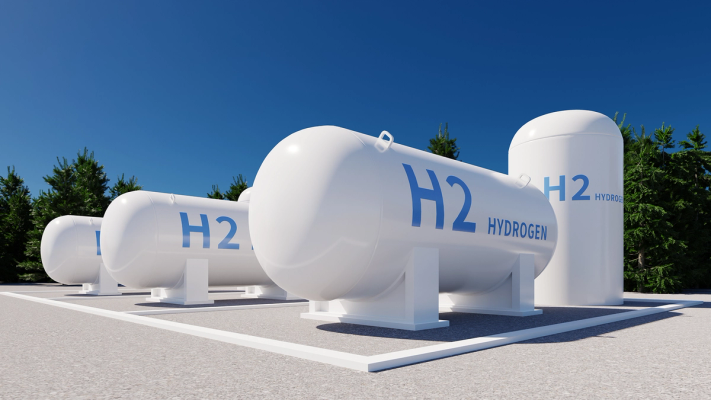
Understanding the Hydrogen Fueling Landscape
Hydrogen is a high-energy, zero-emission fuel that can power everything from long-haul trucks and buses to industrial equipment and maritime vessels. However, storing and delivering hydrogen at scale requires specialized infrastructure to accommodate hydrogen’s low molecular weight and unique physical properties.
The two primary fueling methods for heavy-duty applications are:
- Gaseous Hydrogen (GH₂): Stored at high pressure (350-700 bar) and dispensed in compressed form.
- Liquid Hydrogen (LH₂): Cooled to -253°C (-423°F) and stored as a cryogenic liquid, enabling higher density storage and continuous high-flow fueling.
Each approach has technical and economic trade-offs that must be considered when designing hydrogen fueling stations.
Liquid vs. Gaseous Hydrogen Fueling Systems
Cost Considerations
Cost is a primary factor in hydrogen fueling infrastructure decisions, and LH₂ systems consistently offer a more cost-effective solution than GH₂ in heavy-duty applications.

- Equipment Costs: A best-in-class LH₂ fueling system designed for high-throughput applications costs approximately $6 million, while an equivalent GH₂ system can exceed $10 million. The 40% cost premium of GH₂ is primarily due to the high expense of compression, chilling, and high-pressure storage.
- Storage Costs: Storing hydrogen as a liquid is significantly more cost-efficient. LH₂ storage tanks cost approximately $200 per kilogram of capacity, whereas GH₂ high-pressure storage vessels can cost $1,000 per kilogram. This fivefold cost disparity is due to the reinforced materials and complex engineering required for GH₂ containment.
- Maintenance Costs: GH₂ systems require extensive ongoing maintenance, particularly for compressors and chilling equipment. The estimated annual maintenance cost for a GH₂ station can be 2.5 times higher than an equivalent LH₂ system due to the additional moving parts and wear on compression components.
- Utility Costs: GH₂ systems consume more energy, particularly for compression and chilling. Estimates suggest that energy costs for GH₂ fueling can be up to 40% higher than for LH₂, as LH₂ fueling stations utilize cryogenic cooling rather than energy-intensive refrigeration systems.
Operational Efficiency
When comparing the performance of hydrogen fueling stations, LH₂ systems provide superior throughput and continuous fueling capabilities.
- High-Flow Fueling: LH₂ stations can achieve higher fueling speeds, often in the range of 8–10 kg/min per dispenser, with continuous flow capabilities. GH₂ stations, in contrast, are limited by the depletion of high-pressure storage, leading to slower fill times and inconsistent flow rates.
- Continuous Availability: Since LH₂ is pumped as a liquid before transitioning into a gas at the dispenser, there is no dependency on high-pressure storage capacity. GH₂ systems, however, rely on cascading pressure storage, which can lead to fueling slowdowns as storage depletes.
- Reduced Downtime: GH₂ fueling stations require frequent compressor maintenance and often experience downtime due to high wear on components. LH₂ systems, by contrast, operate with fewer moving parts, leading to longer intervals between service requirements.
Space and Compliance
While LH₂ systems require larger setback distances due to NFPA 2 safety regulations, they offer advantages in terms of equipment footprint and scalability.
- Storage Density: Because LH₂ has a higher volumetric density than GH₂, LH₂ stations require less physical space for equivalent fuel storage. While GH₂ requires multiple high-pressure tanks, LH₂ storage is more compact.
- NFPA 2 Compliance: LH₂ stations are subject to stricter separation requirements due to the potential risks associated with cryogenic storage. However, in heavy-duty settings where large fueling sites are required for vehicle circulation, the additional space needed for LH₂ compliance is often already accounted for in site planning.
- Site Design Considerations: Despite greater setback distances, LH₂ stations can be designed more efficiently due to the compact nature of cryogenic storage. This allows for streamlined layouts that optimize fueling flow and minimize disruptions to operations.
Overall, LH₂ fueling systems offer significant cost savings, improved efficiency, and a scalable design that aligns well with the needs of heavy-duty hydrogen applications.
Technical Insights for LH₂ Systems
Recent advancements in liquid hydrogen (LH₂) fueling technology have improved efficiency, reliability, and safety, making LH₂ a more viable option for heavy-duty applications. Two key areas of innovation are cryogenic pumping systems and advanced heat exchanger processes, both of which optimize fuel transfer while minimizing energy loss.
Cryogenic Pumping and Heat Exchanger Processes
LH₂ fueling stations use cryogenic pumps to transfer liquid hydrogen from storage tanks to dispensers, vaporizing and compressing it to the appropriate pressure for vehicle fueling. These pumps operate with significantly lower energy input than gaseous hydrogen (GH₂) compressors, reducing overall station power consumption.
- Cryogenic pumps deliver hydrogen at a steady flow rate without relying on high-pressure storage, ensuring continuous fueling without requiring extensive mechanical refrigeration.
- Heat exchangers utilize the naturally low temperature of LH₂ to pre-cool hydrogen before dispensing, eliminating the need for energy-intensive chilling systems required in GH₂ stations.
- Boil-off gas management systems have also improved, allowing LH₂ stations to recapture and reuse hydrogen that would otherwise be lost during storage and transfer.
Evolving Industry Standards: SAE J2601-5
The development of new fueling standards, such as SAE J2601-5, is shaping the future of LH₂ fueling infrastructure. This protocol establishes best practices for high-flow LH₂ dispensing, setting flow rate expectations of up to 18 kg/min—a significant leap from existing standards that limit fueling rates to approximately 3.6 kg/min.
As these advancements gain wider adoption, LH₂ stations will be able to support faster fueling times and higher throughput, reinforcing their role in the transition to large-scale hydrogen-powered transportation.
Real-World Applications of LH2 in Heavy-Duty Hydrogen Fueling
The transition to hydrogen-powered heavy-duty transportation is no longer a distant vision—it’s happening now. FASTECH has played a critical role in advancing hydrogen refueling infrastructure across California, constructing state-of-the-art stations that serve transit agencies, trucking fleets, and energy providers. The following projects illustrate the impact of liquid hydrogen (LH₂) and high-capacity hydrogen fueling solutions in real-world applications.
Expanding Southern California’s Hydrogen Network with ICA
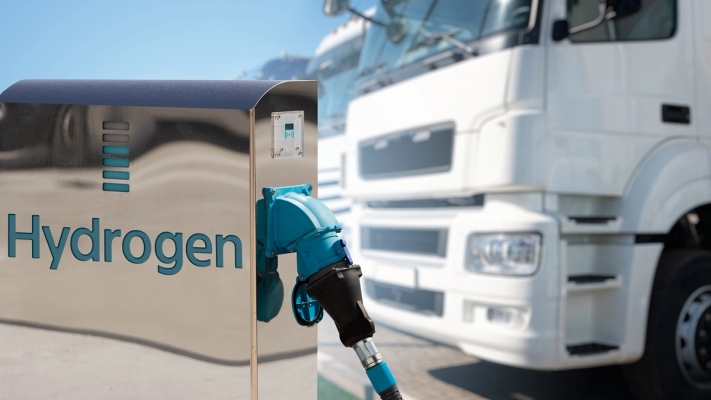
In partnership with Iwatani Corporation of America (ICA), FASTECH completed the construction of a hydrogen refueling station in La Mirada—the final project in ICA’s first retail hydrogen fueling program in North America. This milestone expands the hydrogen fueling network across Southern California, adding to FASTECH’s previous ICA station builds in Santa Ana, Corona, Anaheim, Seal Beach, and Hawaiian Gardens.
Project Overview:
The La Mirada station was designed to integrate seamlessly with an existing ICA petroleum gas station, requiring careful planning to relocate electrical infrastructure while minimizing disruptions to an adjacent fire station. FASTECH leveraged its extensive hydrogen expertise to construct the station using NEL-supplied equipment, including:
- Two station modules
- Two dispensers under a new canopy
- High-pressure storage vessels for efficient on-site capacity
Impact:
By expanding ICA’s hydrogen network, this station demonstrates growing demand for hydrogen as an alternative fuel. The La Mirada project strengthens California’s hydrogen fueling infrastructure, providing a critical refueling point for fuel cell vehicle drivers and positioning ICA for further hydrogen expansion.
Scaling Hydrogen for Heavy-Duty Trucking in Long Beach
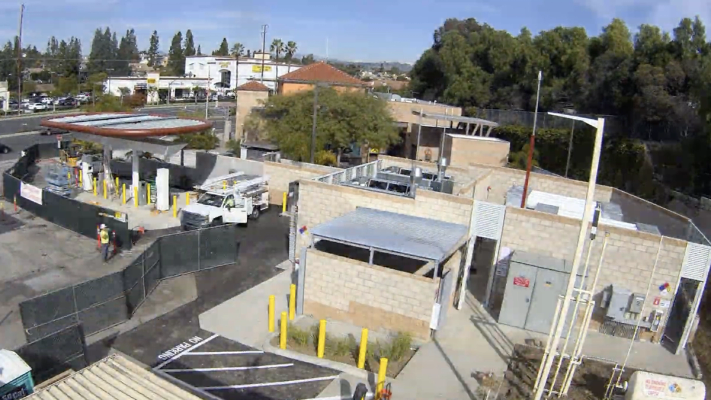
As part of the “Shore to Store” zero-emission trucking initiative, FASTECH constructed the Shell HDV Hydrogen Refueling Station in Long Beach—one of the region's first large-scale hydrogen truck refueling sites. Backed by the California Air Resources Board (CARB), the Port of Long Beach, and Toyota, this project represents a major step toward decarbonizing freight transportation.
Project Challenges & Solutions:
- High-Capacity Storage: The station was designed to accommodate Class 8 trucks, requiring advanced hydrogen storage and high-flow dispensing capabilities.
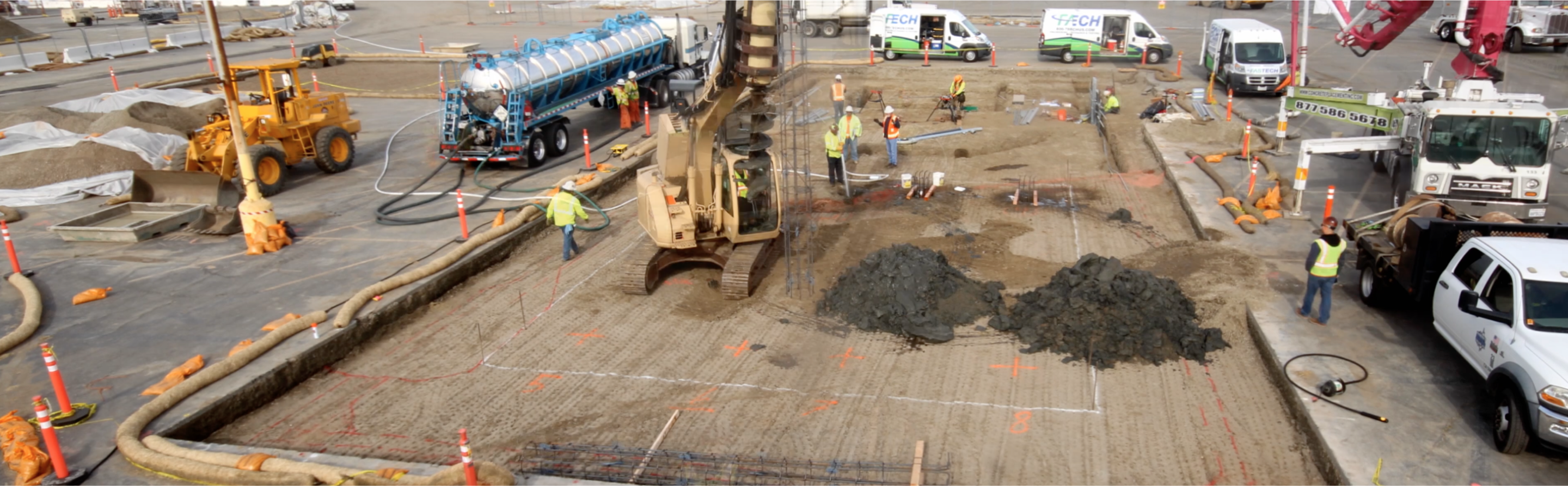
- Environmental Adaptation: The site faced unique construction challenges, including high groundwater levels and contaminated soil, requiring specialized drilling techniques and soil remediation strategies.
- Infrastructure Integration: To future-proof the station, FASTECH installed underground utilities to accommodate the upcoming FuelCell Energy Tri-Generation Power Plant, ensuring a steady on-site hydrogen supply and reducing dependence on trucked-in fuel deliveries.
Results & Industry Impact:
The Shell HDV Hydrogen Refueling Station is now a key hydrogen hub, supplying fuel to both heavy-duty and light-duty hydrogen vehicles. As part of a larger infrastructure rollout, this project validates the feasibility of large-scale hydrogen truck refueling, demonstrating how FASTECH’s engineering expertise is helping decarbonize one of the most emissions-intensive sectors.
The Future of Hydrogen Fueling: Why LH2 Leads the Way
Hydrogen is positioned to play a critical role in the future of clean energy, and for heavy-duty applications, liquid hydrogen (LH2) stands out as the most cost-effective, efficient, and scalable fueling solution. This analysis has highlighted several key advantages of LH2 over gaseous hydrogen (GH2), reinforcing why industry leaders are investing in liquid hydrogen infrastructure.
From a cost perspective, LH2 systems require up to 40% less capital investment than GH2 systems while offering significantly lower operational and maintenance costs. With higher fueling throughput, continuous refueling capabilities, and greater storage efficiency, LH2 supports the demands of transit agencies, trucking fleets, and industrial applications that rely on uninterrupted operations. Although LH2 systems require larger setback distances for compliance, this is often offset by the ample space needed for heavy-duty fueling stations, making it a practical and advantageous choice.
With advancements in cryogenic pumping technology, heat exchanger efficiencies, and the adoption of SAE J2601-5 fueling standards, LH2 infrastructure is evolving rapidly, further solidifying its position as the future of hydrogen fueling. Real-world deployments have already demonstrated its success, with transit agencies and logistics operators leveraging LH2 to scale their zero-emission operations while maintaining cost efficiency and reliability.
Partner with FASTECH to Build the Future of Hydrogen Fueling
FASTECH is leading the charge in hydrogen fueling infrastructure, delivering turnkey solutions that support the industry's transition to clean energy. With decades of experience in energy systems engineering, construction, and maintenance, FASTECH is uniquely positioned to help businesses, transit agencies, and logistics operators develop and optimize their hydrogen fueling networks.
For industry professionals looking to deepen their understanding of LH2 fueling or explore partnership opportunities, FASTECH offers expert guidance and customized infrastructure solutions. Contact FASTECH today for a consultation on your hydrogen fueling project, and be sure to share this guide with colleagues and partners so we can all advance hydrogen fueling solutions together.

Ready to Build the Future of Heavy-Duty Transport?
Partner with FASTECH for innovative, cost-effective hydrogen infrastructure that powers your business forward.